 Sage.Education
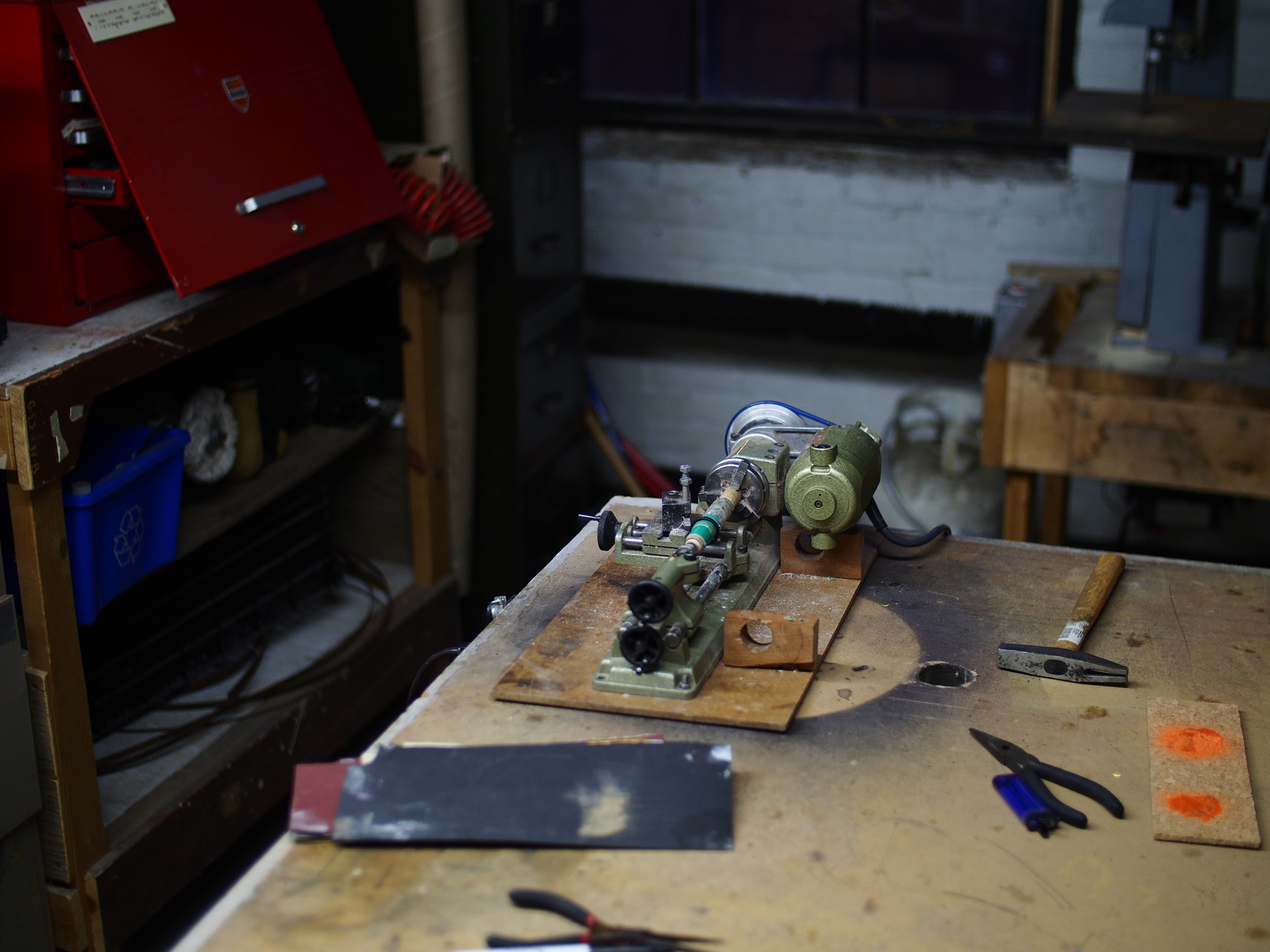
One afternoon, in my kitchen, I made cookies from scratch with my son. Not slice-and-bake, not the kind that arrive in a tube with a peel-back label and pre-scored rounds. From scratch. Flour, butter, sugar, eggs, vanilla, a pinch of salt. The recipe was grandmother's, handwritten on an index card that had survived three moves and then copied to my iPad for my international travel.
My son is fourteen. He has been baking with me since he was small enough to need a stool to reach the counter. He knows the recipe. He still over-measured the flour on the first scoop. He cracked an egg one-handed, a trick he has been perfecting for years, and got shell in the bowl. He asked why we could not just buy cookies at the shop down the road.
I did not have a good answer. Not immediately. The store cookies are fine. They are engineered to be fine. They arrive in a sealed package, consistent in size and flavour, optimized for shelf life and manufactured by a process no one in the store can describe. They cost two euros and require no cleanup.
But standing in that kitchen, fishing eggshell out of batter with a teenager who had flour on his nose, I understood something I had been circling for months.
The cookie was not the point. The process was the point. The mess was the point. The failure with the eggshell and the correction that followed and the moment he realized the dough tasted different from anything in a package — that was the point. He was not learning to bake. He was learning that he could make something from raw materials with his own hands, and that the result, imperfect and lopsided and slightly too brown on the bottom, was his.
Nobody teaches this anymore. Not because the knowledge is lost but because the systems that taught it were removed.
THE DISAPPEARED CLASSROOM
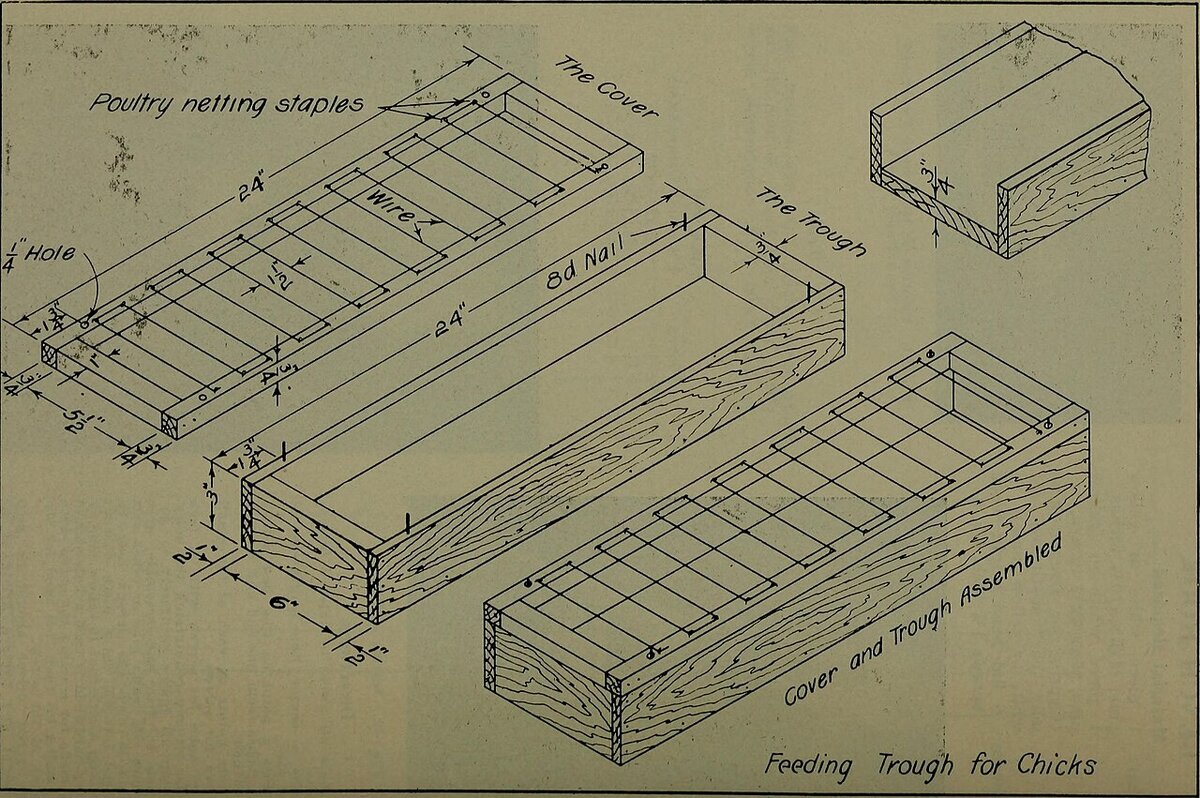
Technical illustration from "Manual Training for the Rural Schools" by Louis Michael Roehl (1922). Woodworking projects designed to be built by students with hand tools. The drawings assume the student will hold the chisel. Public domain, via Wikimedia Commons
In 1982, the majority of American high schools offered woodworking, metalworking, auto shop, and home economics. Students learned to use a lathe, wire a circuit, change a tire, hem a skirt, and bake a loaf of bread. The classes were not prestigious. Guidance counselors steered college-bound students away from them. But they existed, and they taught something no lecture could: that raw materials become finished goods through skill, patience, and tolerance for failure.
By 2013, fewer than a quarter of North American high schools maintained fully equipped shop programs.[1] The Education Week Research Center documented the collapse. Home economics fared worse. What had been a universal offering became an elective, then a rarity, then a memory.
The causes are specific and traceable. The No Child Left Behind Act of 2001, signed by President George W. Bush, tied federal funding to standardized test scores in math and reading.[2] Districts responded by cutting non-tested subjects. Shop class does not appear on a standardized test. Neither does knowing how to cream butter. Los Angeles Unified School District dismantled many of its shop programs in the 1990s and 2000s, converting workshop spaces into computer labs and test-prep classrooms. Chicago Public Schools followed the same pattern. The rooms that once held lathes and sewing machines filled with rows of identical monitors.
Arne Duncan, U.S. Secretary of Education from 2009 to 2015, accelerated the trajectory. His Race to the Top initiative rewarded states for raising academic performance metrics. The implicit message was clear: college readiness is the only readiness that counts. Vocational education was rebranded as "career and technical education" under successive reauthorizations of the Carl D. Perkins Act, each revision drifting further from the workshop and closer to the spreadsheet.
Matthew B. Crawford, a philosopher and motorcycle mechanic who holds a fellowship at the Institute for Advanced Studies in Culture at the University of Virginia, published Shop Class as Soulcraft in 2009. The book documented what the policy data confirmed: a society that had systematically devalued the work of the hands in favour of the work of the screen. "The disappearance of tools from our common education," Crawford wrote, "is the first step toward a wider ignorance — not just of how to fix things, but of the very idea that things can be fixed."[3]
The number of AP exams taken annually in the United States rose from roughly one million in 2000 to over five million by 2020.[4] In the same period, the percentage of students who had ever used a hand tool in a school setting fell to a figure nobody bothered to measure, because nobody considered it a metric worth tracking.
What replaced the workbench was not nothing. It was test preparation. More math worksheets, more reading comprehension passages, more practice for an exam that measures a student's ability to select the correct answer from four options provided by someone else. The factory model of education, which had always favoured compliance over creativity, completed its transformation. The students learned to choose. They stopped learning to make.
THE PRE-MADE GENERATION

A supermarket aisle. Every product sealed, labelled, and optimized for shelf life. No evidence of how any of it was made. Photo: Nilo Velez, CC0
The consequences are not abstract. They are measurable, and they extend beyond the workshop.
David Cutler, a professor of economics at Harvard University, published a study in the Journal of Economic Perspectives in 2003 documenting the decline of time spent on home food preparation in America.[5] In 1965, the average household spent over two hours per day preparing food. By the early 2000s, that figure had fallen below one hour. The USDA Economic Research Service tracked the financial impact: the share of food spending on meals prepared outside the home rose from 25 percent in 1970 to over 50 percent by 2019.[6] Americans did not stop eating. They stopped making what they ate.
Michael Pollan, a journalism professor at the University of California, Berkeley, quantified the irony in his 2013 book Cooked.[7] The average American spends 27 minutes a day on food preparation — and a longer period watching other people cook on television. The activity migrated from the hands to the eyes. From participation to spectatorship. From making to consuming a performance of making.
A 2017 survey by the International Food Information Council Foundation found that only 10 percent of millennials reported frequently baking from scratch.[8] Their grandparents baked daily. The knowledge did not vanish. It was not passed down, because the systems that facilitated the transfer (home economics classes, multi-generational communities, the economic necessity of making rather than buying) were dismantled one by one, each removal justified by efficiency, each efficiency creating an economic dependency.
The pattern is not limited to food. Kyle Wiens, the CEO and co-founder of iFixit, has spent fifteen years documenting the shift from repair to replacement. When Apple paid a $113 million settlement in 2020 over deliberately slowing older iPhones[9], the scandal is not that a company had designed its product to degrade. The scandal is that millions of consumers had replaced their phones rather than questioning why they slowed down. They did not think to fix. They had never been taught that fixing was an option.
The European Environmental Bureau estimated in 2019 that extending the lifespan of all smartphones, washing machines, laptops, and vacuum cleaners in the EU by one year would save nearly four million tonnes of CO2 annually by 2030.[10] The environmental cost of the replacement mindset is calculable. The cognitive cost is harder to measure but no less real: a generation that encounters a broken thing and reaches for a credit card instead of a screwdriver. Not because they are lazy. Because no one ever put a screwdriver in their hand and showed them what it was for.
The pre-made cookie and the pre-made answer have the same architecture: a finished product that arrives without requiring the consumer to understand how it was produced. The consumer learns to consume. The skill of making atrophies. The dependency deepens.
THE VENDING MACHINE IN THE CLASSROOM
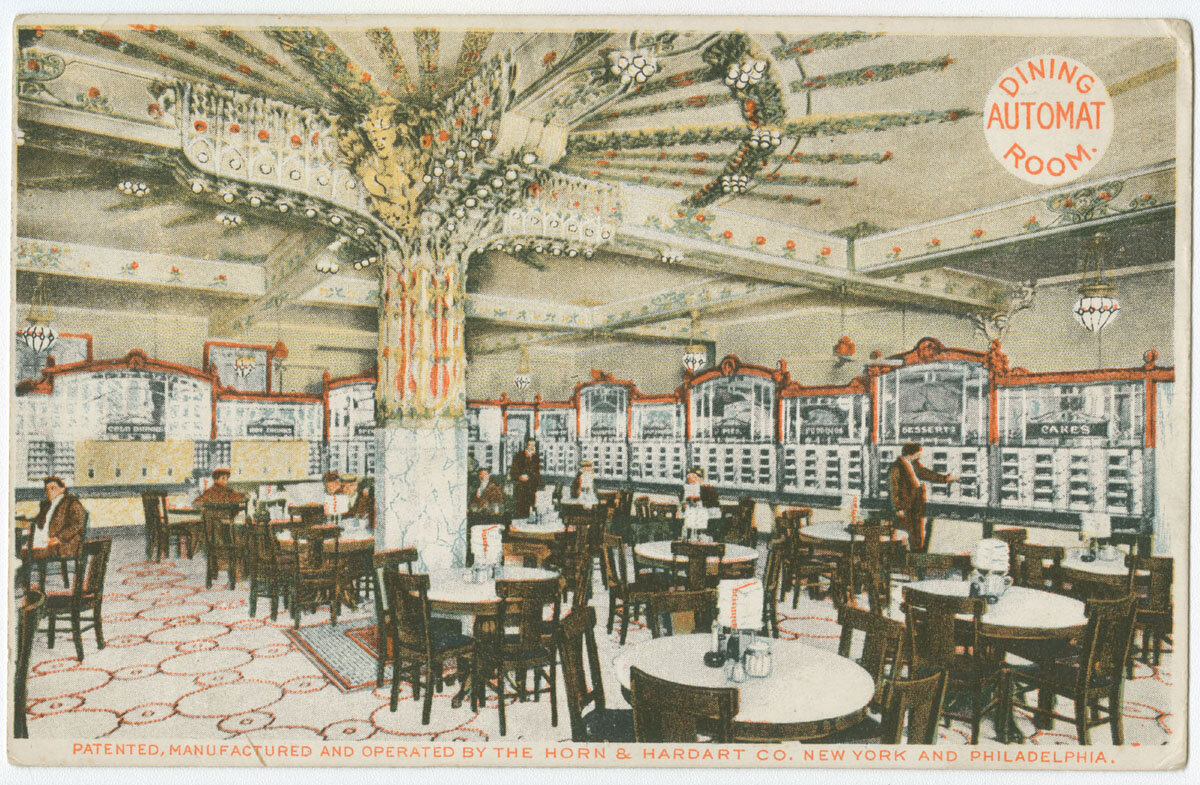
A Horn & Hardart Automat, circa 1906. Insert a coin, open a glass door, remove a finished meal. No kitchen visible. No cook to speak to. The original vending machine. Photo: Library Company of Philadelphia. Public domain, via Wikimedia Commons
In November 2022, OpenAI released ChatGPT. Within two months, it had 100 million users. Within a year, a survey by the Pew Research Center found that one in four American teenagers had used it for schoolwork.[11] Among college students, the figure was higher. Stanford University's Digital Education initiative reported that over 60 percent of college students used AI tools for coursework within the first year of ChatGPT's release.[12]
The pattern of use is revealing. Students are not using AI the way a carpenter uses a saw — as a tool that extends human capability while requiring human skill. They are using it the way a customer uses a vending machine. Insert a prompt. Receive a finished product. Submit. The machine does the work. The student does the approving.
Turnitin, the plagiarism detection company, reported flagging AI-generated content in approximately 11 percent of submissions globally by mid-2023.[13] The number understates the phenomenon, because detection rates trail generation capabilities, and because the most effective use of AI in academic dishonesty is not wholesale generation but selective replacement — swapping the hard paragraphs for machine-written ones while keeping enough original prose to pass the filter.
Ethan Mollick, a professor at the Wharton School at the University of Pennsylvania, published research in 2023 finding that students who used AI as a "crutch" (generating finished outputs rather than using the tool to explore concepts) showed weaker retention on subsequent assessments without AI access.[14] The tool improved the assignment. It degraded the learning. The cookie arrived pre-made. The student never touched the flour.
Anthropic, the company behind Claude, published a randomized controlled trial in January 2025. Fifty-two junior engineers learning a new Python library were split into AI-assisted and unassisted groups. Developers who delegated code generation to the model scored 17 percent lower on comprehension tests. Those who used AI only for conceptual questions scored 65 percent or higher. The gap was most pronounced in debugging: AI-reliant developers "encountered fewer errors during the task itself but were less able to identify and resolve issues independently afterward."[15]
The finding is a precise analogy for what happened to home economics. The student who uses a chatbot to produce an essay encounters fewer difficulties during the assignment — no writer's block, no structural confusion, no confrontation with their own ignorance. But the difficulties were the learning. The eggshell in the batter was the lesson. The mess was where the skill formed.
Betsy Sparrow, a researcher at Columbia University, demonstrated in a 2011 study published in Science that people who expected to have future access to information showed lower rates of recall.[16] The brain does not encode what it expects to retrieve externally. Evan Risko, a professor at the University of Waterloo, formalized this as "cognitive offloading" in a 2016 paper in Trends in Cognitive Sciences.[17] The more we rely on external tools for cognitive tasks, the less we develop internal capacity. The calculator did not make students better at arithmetic. It made arithmetic someone else's problem.
AI is the universal cognitive offloader. It does not offload one skill. It offloads all of them — writing, reasoning, analysis, synthesis, debugging, design. Every skill it performs is a skill the student does not develop. Every finished output it delivers is a batch of pre-made cookies: consistent, adequate, and belonging to no one.
Jean Twenge, a professor of psychology at San Diego State University and author of iGen, documented the generational shift in how post-2012 youth spend their time. Dramatic increases in passive screen consumption. Declines in part-time jobs where hands-on skills were learned. Declines in independent activities of every kind. Common Sense Media's 2021 census found that American teens average eight hours and 39 minutes of screen media use per day, excluding schoolwork.[18] Only 3 percent of that time is devoted to content creation — making videos, coding, digital art, writing. The rest is consumption. Watching. Scrolling. Receiving.
Three percent. Ninety-seven percent of screen time is spent consuming what someone else made. AI does not correct this ratio. It perfects it. The student who asks a chatbot to write an essay has achieved the logical endpoint of the consumption model: the appearance of creation without any of its friction, struggle, or cognitive residue.
THE WORKBENCH THAT SCALES
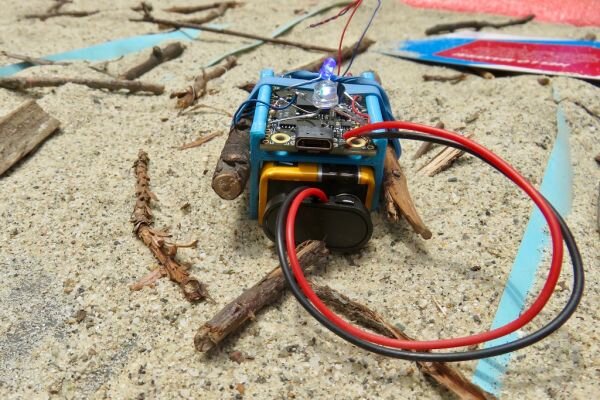
Maker Faire 2017. Hands on materials, tools within reach, something being built that did not exist an hour ago. Photo: fabola, CC BY-SA 2.0, via Flickr
Mitch Resnick, a professor at the MIT Media Lab and the creator of Scratch, has spent two decades arguing that digital tools should be instruments of creation, not consumption. In his 2017 book Lifelong Kindergarten[19], he warned that most children's technology use is "TV-like" — passive, receptive, spectatorial. The alternative, Resnick argued, is to build tools that put the learner in the position of the maker: not receiving finished products but constructing them, debugging them, iterating on them, and sharing them with others who are doing the same.
The trajectory matters as much as the starting point. Scratch teaches a child to snap blocks together and see something happen on screen. It is the recipe card: structured, forgiving, designed to produce a result. But the goal is not to stay in Scratch forever. The goal is to move to Snap!, the extended environment developed by Jens Mönig and Brian Harvey at the University of California, Berkeley, which exposes first-class procedures, lambda expressions, and build-your-own-blocks — the computational equivalent of learning to bake without a recipe. The student who moves from Scratch to Snap! is the student who moves from following instructions to writing them. From consuming a tool to building one.
Paulo Blikstein, a professor at Columbia University's Teachers College, demonstrated through his FabLearn Labs research that students in maker-oriented programs showed improved problem-solving skills and higher engagement, particularly among underrepresented students.[20] The maker approach did not merely teach different content. It taught a different relationship to the material: the student as author, not audience.
Kylie Peppler, a professor at the University of California, Irvine, published research showing that maker-oriented curricula can close equity gaps in STEM engagement.[21] The workshop, it turns out, is a more democratic space than the lecture hall. When the measure of success is "did you build something that works" rather than "did you select the correct answer," a different population of students succeeds.
This is the architectural question that AI in education has not yet answered. Not whether AI can produce an essay, a lesson plan, a piece of code, a set of flashcards. It can. The question is whether the tool positions the human as the maker or the consumer. Whether it hands over raw materials and says "build" or hands over a finished product and says "approve."
Sage.is AI-UI was designed as a workbench, not a vending machine. Open-source (AGPL-3 licensed), self-hostable, model-agnostic. The architecture does not dispense answers. It provides a Workshop where people build their own agents, their own tools, their own knowledge bases. It provides Spaces for human-to-human collaboration, human-to-AI collaboration, and even AI-to-AI collaboration, in a shared environment where the process is visible and the product belongs to the people who made it.
The distinction is not superficial. A vending machine and a workshop both contain useful things. The difference is what the person who uses them learns. The vending machine teaches you to insert coins. The workshop teaches you to use tools. The vending machine produces dependency. The workshop produces capability.
The understanding that you can make something from raw materials, that the lopsided and imperfect thing you built with your own hands is yours in a way that no purchased product can be.
- Isabelle Plante
Gary Stager, a collaborator of Seymour Papert at the MIT Media Lab and co-author of Invent to Learn[22], has argued that constructionism (the principle that learning is most effective when learners construct tangible objects) applies directly to AI. The question is not whether students should use AI. The question is whether they use it the way a woodworker uses a lathe (a tool that extends capability while requiring skill) or the way a customer uses a catalogue (a menu of finished products that requires only selection).
The Sage.is AI platform Spaces are the modern shop class. Not a room full of identical monitors running the same chatbot. A workshop where teams build agents that do specific things, knowledge bases that contain specific expertise, tools that solve specific problems. The AI is the lathe, not the furniture. The student learns to build. The sky, as it turns out, is the limit — when people have tools instead of outputs.
THE RECIPE
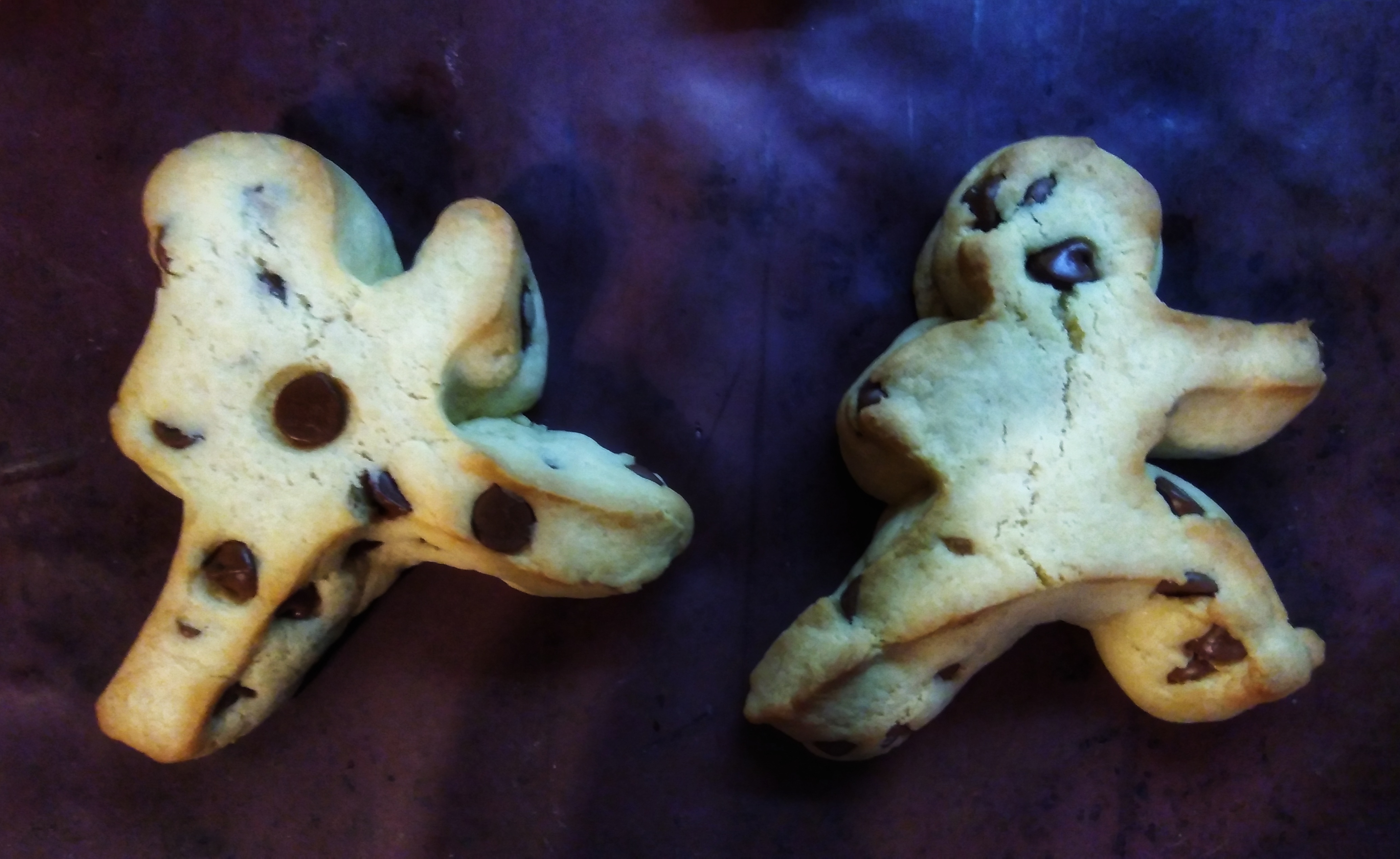
Dough, Shaped and baked. Our hands know what the recipe card cannot teach. Photo: Izzy Plante, CC BY 2.0
The cookies came out of the oven slightly lopsided. The edges were uneven. One side of the tray had browned faster because the oven in that kitchen runs hot on the left, a fact you can only learn by burning something. My son picked up the first one before it had cooled, broke it in half, and ate it standing at the counter.
He had made it.
He measured the flour and cracked the eggs and fished out the shell and creamed the butter until his arm was tired and watched through the oven window and pulled the tray with a towel because we could not find the oven mitt (it was at the fireplace in the living room). Every step had required a decision. Every decision had carried the possibility of failure. The failure with the eggshell had taught him something no recipe could: that mistakes are part of making, and that you fix them and keep going.
Doug Stowe, a woodworking instructor at the Clear Spring School in Eureka Springs, Arkansas, has spent decades arguing that the hands teach the mind.[23] His Wisdom of the Hands program integrates woodworking into the K-8 curriculum — not as vocational training, but as cognitive discipline and development. The premise is Crawford's premise, and Papert's premise, and every parent and grandparent's premise who ever stood a child on a stool at a kitchen counter: you learn by making. You learn that you can make. And once you learn that, you never unlearn it.
We removed the workbench from the classroom. We removed the kitchen from the curriculum. We replaced making with choosing, building with consuming, process with product. For thirty years, the pattern held: each generation slightly less capable of making things with their hands, slightly more dependent on systems they did not build and could not repair.
Now AI offers to complete the project. The universal vending machine. The tool that produces any output without requiring the user to understand the process, struggle with the materials, or develop the skill. The pre-made cookie at planetary scale, consistent in quality, available on demand, belonging to no one.
The alternative is not to reject AI. It is to refuse the vending machine architecture. To build tools that put the human in the position of the maker — hands in the flour, eggshell in the batter, learning happening in the mess. A workbench, not a menu. A workshop, not a store.
Our grandmother's recipe card sits in a drawer in across the ocean. The ink is almost gone. Copied into my tablet, the cookies it produces are not optimized for anything. They require twenty-five minutes of labour, a tolerance for imperfection, and the willingness to teach a fourteen-year-old that the thing he made with his own hands, misshapen and too brown on the bottom, is worth more than anything they could buy.
That is the lesson the workshop teaches. Not how to bake. Not how to build. That you can.
The empty workshop is not waiting for better tools. It is waiting for someone to pick the tools up.
Footnotes
The views expressed are those of the editorial board and do not necessarily reflect the positions of any institution mentioned. Sage.is AI-UI is a product of Startr LLC. Full disclosure and transparency is a feature, not a bug.
National Center for Education Statistics, "Career and Technical Education (CTE) Statistics," secondary/high school enrollment data, 1982–2013. nces.ed.gov/surveys/ctes. See also Dunn Lumber, "The Death of Shop Class: The History and Decline." dunnlumber.com ↩︎
No Child Left Behind Act of 2001, Pub. L. 107-110, 115 Stat. 1425 (2002). Signed January 8, 2002. congress.gov ↩︎
Matthew B. Crawford, Shop Class as Soulcraft: An Inquiry into the Value of Work (New York: Penguin Press, 2009). ISBN 978-1-59420-223-0 ↩︎
College Board, "AP Program Participation and Performance Data," 2000–2020. collegeboard.org ↩︎
David M. Cutler, Edward L. Glaeser, and Jesse M. Shapiro, "Why Have Americans Become More Obese?" Journal of Economic Perspectives 17, no. 3 (Summer 2003): 93–118. doi.org/10.1257/089533003769204371 ↩︎
USDA Economic Research Service, "Food Expenditure Series," updated annually. ers.usda.gov ↩︎
Michael Pollan, Cooked: A Natural History of Transformation (New York: Penguin Press, 2013). ISBN 978-1-59420-421-0 ↩︎
International Food Information Council Foundation, "2017 Food and Health Survey." foodinsight.org ↩︎
Apple Inc., multistate settlement over iPhone performance throttling, November 2020. $113 million to a coalition of 34 states and the District of Columbia. Separate from the $500 million class-action settlement (March 2020). azag.gov ↩︎
European Environmental Bureau, "Cool Products Don't Cost the Earth," 2019. eeb.org ↩︎
Pew Research Center, "Teens and AI Chatbots," January 2024. pewresearch.org ↩︎
Stanford University, Human-Centered Artificial Intelligence (HAI), "AI and Education Survey," 2023. hai.stanford.edu ↩︎
Turnitin, "Year One: AI Writing Detection Data and Insights," 2023. turnitin.com ↩︎
Ethan Mollick and Lilach Mollick, "Using AI for Learning: Evidence from a Controlled Study," Wharton School working paper, 2023. papers.ssrn.com ↩︎
Anthropic, "The Impact of AI Assistance on Developer Skill Formation," randomized controlled trial, January 2025. anthropic.com ↩︎
Betsy Sparrow, Jenny Liu, and Daniel M. Wegner, "Google Effects on Memory: Cognitive Consequences of Having Information at Our Fingertips," Science 333, no. 6043 (August 2011): 776–778. doi.org/10.1126/science.1207745 ↩︎
Evan F. Risko and Sam J. Gilbert, "Cognitive Offloading," Trends in Cognitive Sciences 20, no. 9 (September 2016): 676–688. doi.org/10.1016/j.tics.2016.07.002 ↩︎
Common Sense Media, "The Common Sense Census: Media Use by Tweens and Teens, 2021." commonsensemedia.org ↩︎
Mitchel Resnick, Lifelong Kindergarten: Cultivating Creativity through Projects, Passion, Peers, and Play (Cambridge, MA: MIT Press, 2017). ISBN 978-0-262-03729-7 ↩︎
Paulo Blikstein, "Digital Fabrication and 'Making' in Education: The Democratization of Invention," in FabLabs: Of Machines, Makers and Inventors, ed. Julia Walter-Herrmann and Corinne Büching (Bielefeld: transcript Verlag, 2013). See also FabLearn Labs, Columbia University Teachers College. fablearn.org ↩︎
Kylie Peppler, "STEAM-Powered Computing Education: Using E-Textiles to Integrate the Arts and STEM," IEEE Computer 46, no. 9 (2013). doi.org/10.1109/MC.2013.272 ↩︎
Sylvia Libow Martinez and Gary Stager, Invent to Learn: Making, Tinkering, and Engineering in the Classroom, 2nd ed. (Torrance, CA: Constructing Modern Knowledge Press, 2019). ISBN 978-0-9891511-8-0 ↩︎
Doug Stowe, Wisdom of the Hands blog and program, Clear Spring School, Eureka Springs, Arkansas. wisdomofhands.blogspot.com ↩︎