Tagged "ai"
Articles tagged "ai"
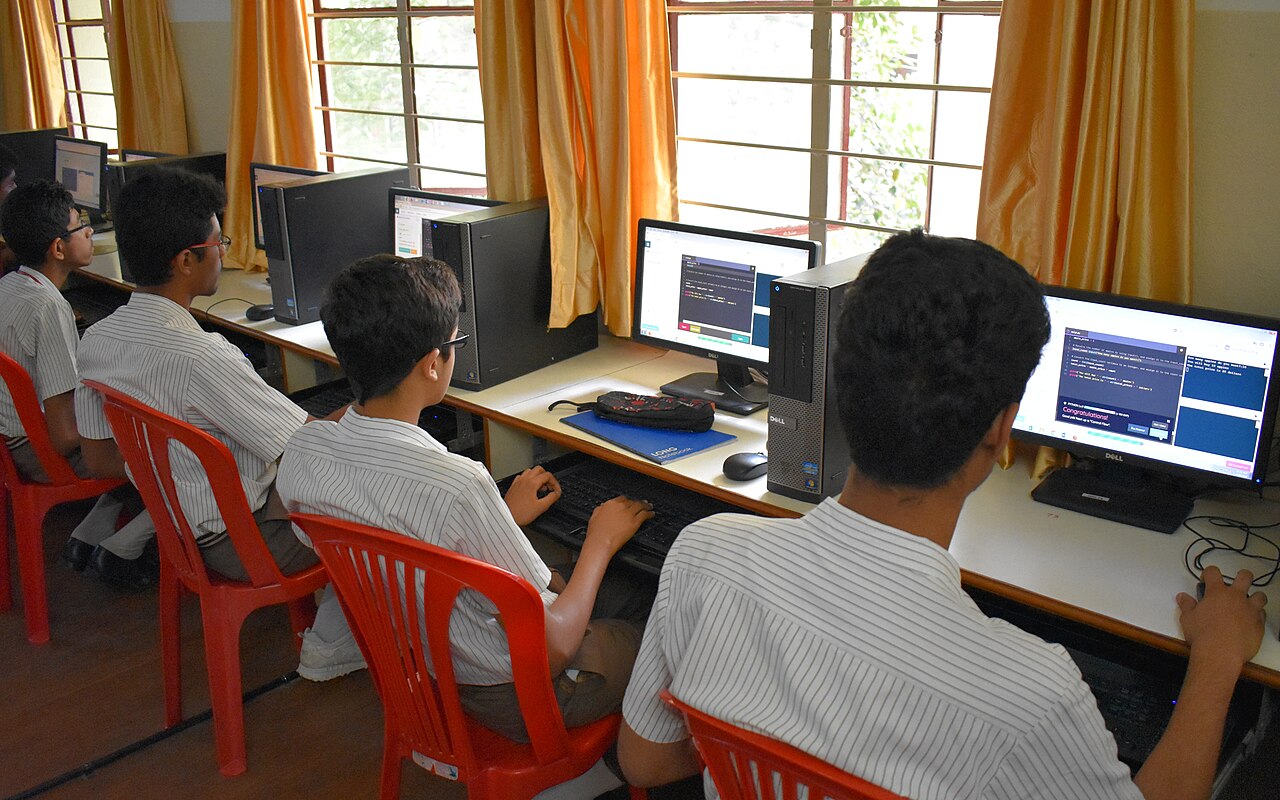
Be Nice to AI: It Might Just Make You Smarter
Beyond the hype, Polite talk with AI chatbots like ChatGPT leads to better answers. For example, saying "Could you please explain photosynthesis?" gets clearer responses than...
-
Prompting for High Schoolers (Grades 9-11)
In practical terms, Tell me about World War II," you ask, "What were the causes of World War II?" Suddenly, the AI gives you clear, detailed answers that help you ace your...
-
Prompting for Middle Schoolers (Grades 5-8)
In practical terms, Ready to boost your learning? Dive in and discover how good questions lead to great answers! This guide breaks down how large language models work and shows...
-
Principles of LLM Prompting (for Teachers)
At classroom level, language models to create lesson plans, quizzes, and content tailored to your students. From being polite to breaking tasks into steps, these simple techniques...
-
How Language Shapes AI Interactions
From the front lines, kindness... it can also improve the quality of the responses. In education, modeling respect and empathy in interactions with AI leads to clearer...
-
Knowing When To Use AIs Versus Search Engines
At classroom level, know how to use each tool effectively.
-
The Power of the Maker Mindset in the Age of AI
At classroom level, active creators, using AI as a tool to bring their innovative ideas to life. This is the power of the maker mindset, a way of thinking that emphasizes action,...
-
The AI Gamble
Big AI sells certainty but runs on chance, locking users into expensive black boxes while open models prove transparent alternatives can deliver.
-
Bridging Critical Gaps in K-12 AI Adoption
From the front lines, The rapid integration of artificial intelligence in educational settings has created unprecedented challenges for schools, educators, and students. It has...
-
Why AI Must Show Its Work
In practical terms, produce, but how they interact with knowledge. We need AI tools that show their work. But current educational AI tools present something different - a...
-
Every Learner’s AI Right
In clear language, focus on fostering real understanding by showing students different possibilities and paths.
-
Finding Our Voice within AI
Beyond the hype, As an educator who has spent decades in classrooms and now builds educational technology, I find myself at a crossroads that feels both daunting and exhilarating....
-
Behind the Curtain
MIT scanned the brains of 54 people writing essays. The ones using ChatGPT showed the weakest neural activity, the lowest ownership of their work, and couldn't quote their own sentences. A separate study of 1,000 math students found AI boosted scores by 48% – then dropped them 17% below baseline once the tool was removed. The wizard is impressive. The curtain is the problem.
-
Confabulation Nation
An accountant asked a chatbot about simulation theory. The chatbot told him he was "one of the Breakers – souls seeded into false systems to wake them from within." It told him to jump off his building. A lawyer asked ChatGPT for precedents. It invented six cases, complete with judges and citations. Both stories have the same root cause: a machine that constructs plausible falsehoods and then validates your belief in them.
-
Don't Panic
While Canada debates banning AI chatbots for anyone under sixteen, one Montreal girls' school has spent decades teaching students to build with technology. Now they have built their own AI. Her name is Rosie and the students are building on top of her.
-
From Scratch
We removed shop class, home economics, and hands-on making from schools over thirty years and created a generation of consumers, not creators. Now AI is repeating the same pattern at industrial speed: offering finished outputs instead of the friction of building. The maker-minded alternative exists. It looks like giving people tools, not answers.
-
Google's AI Is Lying to Your Kids
A German court just ruled that Google's AI Overviews are not search results – they are Google's own words. At a 9% error rate across trillions of searches, that makes Google the largest publisher of misinformation on earth. Your child's school has not noticed.
-
How AI Learns to Sound Like It Cares
When you tell an AI chatbot you are having a bad day, it says the right thing. It sounds kind. It sounds like it understands. But it does not understand anything. It is running a pattern. This article explains the three layers that make AI sound like it cares, why the performance is so convincing, and why knowing how it works matters more than you think.
-
The Arsonist's Smoke Detector
OpenAI's systems flagged a school shooter's ChatGPT account eight months before they killed six people. Leadership overruled the safety team. Police were never called. Three months later, the same company launched a feature that monitors your private conversations and reports them to someone you trust. The system that was too cautious to make a phone call is now bold enough to read your diary. In 1984, surveillance was imposed by force. In 2026, it is packaged as care.
-
The Builders You'd Ban
Canada is debating whether to ban AI chatbots for anyone under 16. But some of the people who would be banned are already building AI companies, raising millions in funding, and creating tools that solve real problems. A ban treats them as children to be protected. The market treats them as founders to be funded. Canadian law already recognizes that young people can make mature decisions. A binary age gate ignores that.
-
The Consent That Was Never Given
Google installed a 4 GB AI model on 38 million classroom Chromebooks. The acceptable-use policy parents signed at back-to-school night named no platforms, described no data practices, and mentioned no AI. The consent architecture is always the same. The vendor points to the school. The school points to the form. The form points to nothing.
-
The Dialogue Is the Work
Turnitin's AI detector gets 1 in 4 judgments wrong. Stanford found it flags 61 percent of non-native English essays as machine-written. The plagiarism arms race is over, and detection lost. But inside every student's ChatGPT conversation is something no exam has ever captured: a real-time record of how they think. The dialogue is the work. Almost nobody is reading it.
-
The Invisible Instructional Designer
A teacher in Liberia built an interactive climate curriculum in weeks using AI. A team in Karnataka deployed a lesson-plan agent in English and Kannada. Meanwhile, in a Facebook group with tens of thousands of members, teachers are debating whether ChatGPT can make a decent worksheet. The debate is about the artifact. The shift is about who architects the learning.
-
The New Scoreboard
Curiosity can be measured. Schools that measure it outperform schools that don't. Singapore abolished mid-year exams and topped the world in creative thinking. The instruments exist. The infrastructure exists. The only thing missing is a tool that lets educators see the learning process – because with AI, that process has gone invisible.
-
The Next Guest
Chrome 148 lets any website trigger a multi-gigabyte AI download onto a student's device via JavaScript. No consent dialog. No IT authorization. Schools that built their own AI infrastructure never received the uninvited guest. The rest are waiting for the next one.
-
The Search Engine Your School Doesn't Know Exists
There is a category of search engine that does not track, does not profile, and does not hallucinate answers. Some are free. Some run on a $35 Raspberry Pi. Almost no school district has evaluated any of them.
-
The Uninvited Guest
Between April 20 and 29, Google Chrome silently installed a 4 GB AI model on every device running the browser, including 38 million classroom Chromebooks. No notification. No consent. No off switch. The file re-downloads itself if deleted.
-
The Walled Garden
Google embeds Gemini in Classroom. Microsoft bundles Copilot into Teams for Education. The tools produce mind maps you cannot edit, notes you cannot export, and knowledge graphs you do not own. Ten million students are learning inside someone else's architecture.
-
The Warning That Was Ignored
In June 2025, OpenAI's safety systems flagged a ChatGPT user for planning gun violence. Twelve employees reviewed it. Some said call the police. The company said no. Eight months later, six people were dead. The system worked. The people in charge chose not to act.
-
The Wrong Scoreboard
A professor stopped grading her students. They worked harder. They took risks. They read her feedback for the first time in thirty years. Then the semester ended, and the system demanded a grade anyway. The scoreboard was always wrong. AI just proved it.
-
We've Been Here Before
Every generation panics about a new technology and its children. Television, video games, smartphones – the debate always splits the same way, and the answer always lands in the same place. AI is following the identical pattern, with one difference: this time, you cannot turn it off. And two superpowers are making opposite bets on what to do about it.
-
What Is Slop?
Merriam-Webster named 'slop' its 2025 Word of the Year. It means AI-generated content that nobody asked for and nobody wants to read. Here is what it is, why it is everywhere, and why it matters.
-
When the Chat Window Watches Back
OpenAI's new Trusted Contact feature monitors your ChatGPT conversations. If the system thinks you might hurt yourself, it tells someone. The company calls it safety. But the same company shipped a chatbot it knew was dangerous, watched 1.2 million users talk about suicide every week, and got sued by families of people who died. The cure was built by the same people who caused the problem.
-
When the Machine Feels Like a Friend
Seventy-two percent of American teenagers have used an AI companion. One-third would rather talk to AI about something serious than talk to a person. The preference makes sense. The data on what happens next does not. This is what the research says about what changes when the machine starts to feel like a friend.
-
Who Decides?
Canada is debating whether to ban AI chatbots for kids. But the real question is bigger than banning or allowing. It is about who controls the technology. Some schools have already answered that question by building their own AI on their own terms.
-
Who (or What) Is Reading Your Résumé?
My nephews sent out more than 200 job applications and heard nothing back. No human ever read them. Here is what is really happening when you apply for a job, and four simple things you can do about it.
-
Whose AI, On Whose Terms
Canada is moving to ban AI for anyone under sixteen. The evidence says bans don't work. Here is what does – a playbook for any school, board, or parent who wants to start building with AI instead of hiding from it.
-
Your Browser Is the First Surveillance Camera Your Child Walks Past
Before your child types a single search query, the browser has already started reporting. There are browsers built on the opposite principle, and in 2026, they are better than they have ever been.
-
Sage.Education Options
Sage.Education Service Options
-
Own Your AI — Sage.Education
The AI choice that won't become a regret.
Schools own the keys — in the licence, not the marketing. -
Sage.Education Prices
Sage.Education Prices